
Valencia guide
Living in Valencia as an expat: neighbourhoods and first steps
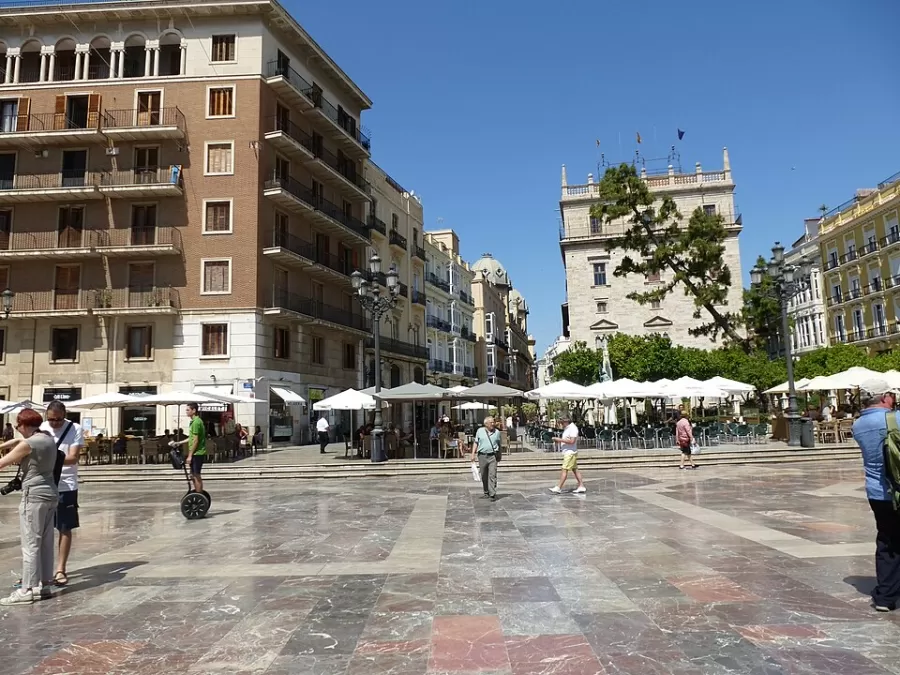
València combines a compact historic centre, a long urban beach, a huge park running through the old riverbed and a ring of market-garden towns, all within easy reach by bike, metro or tram. Choosing where to live, and then getting your paperwork in the right order, makes the first months far smoother. This guide gives an honest, qualitative overview of the main neighbourhoods and then walks you through the first administrative steps, in the order that usually works best.
- Each neighbourhood has a distinct character: historic and lively in Ciutat Vella, cosmopolitan in Russafa, elegant in the Eixample, seaside in El Cabanyal and Malva-rosa, student-friendly in Benimaclet, residential in Campanar and Patraix.
- Visit at different times of day before signing a contract; noise, light and transport links vary street by street.
- The usual paperwork sequence is: NIE or visa, padrón, TIE or EU registration certificate, Social Security number, health card (SIP), bank account, and an eye on tax residency.
- The padrón depends on the town where you actually live: the city of València and each surrounding town have their own councils.
Choosing a neighbourhood
We deliberately do not quote rents or prices here: they change quickly and vary from one building to the next. Instead, here is what each area feels like, so you can decide where to focus your search. Walk around, visit at night and on a weekend morning, and check the nearest metro, tram or bus line before you commit.
Ciutat Vella and El Carmen
The old town is where you will find the cathedral, the Central Market, the Silk Exchange and a maze of narrow streets. El Carmen, its north-western quarter, is known for street art, small bars and an alternative feel. Living here means everything is on foot, but many buildings are old, some flats get little natural light, and certain streets are busy late into the night, especially at weekends and during festivals. Ideal if you want to be in the middle of things and do not mind some noise.
Russafa (Ruzafa)
Just south of the centre, inside the Eixample district, Russafa is the city’s best-known cosmopolitan neighbourhood: a busy local market, independent cafés, restaurants and galleries, and a large international community. It is lively and well located for the train station and the centre. The flip side is evening noise on the most popular streets and a lot of demand for flats.
Eixample (Pla del Remei and Gran Via)
The nineteenth-century expansion around Gran Via Marqués del Túria and Colón offers wide streets, classic apartment buildings, upmarket shops and quick access to the old riverbed park. It is quieter and more formal than Russafa, popular with families and professionals who want to be central without the nightlife.
El Cabanyal and Malva-rosa
Part of the maritime district (Poblats Marítims), El Cabanyal is a former fishermen’s quarter with colourful tiled façades, a grid of low houses and a strong local identity. Malva-rosa, to the north, runs along the beach promenade and is more residential. Here you trade the city centre for sea air, the beach on your doorstep and tram or bus links into town. Some streets in El Cabanyal are still being renovated, so the feel can change from one block to the next.
Benimaclet
Once a separate village, Benimaclet keeps a small central square and a community spirit. Being close to university campuses, it has many students and young professionals, plus cultural associations and a laid-back atmosphere. It is well connected by metro and tram and borders the market gardens (horta) to the north.
Campanar
To the north-west, Campanar mixes a tiny historic core around its church with modern residential blocks, shopping centres and good access to the western end of the old riverbed park. It tends to suit families and those who prefer newer buildings, lifts and parking.
Patraix
Patraix, to the south-west, is a traditional residential neighbourhood with a village-style square, local shops and a calm, everyday rhythm. It feels very Valencian and less international than the centre, with metro connections towards the city.
Quatre Carreres and the City of Arts and Sciences
The area around the Ciutat de les Arts i les Ciències, in the Quatre Carreres district, has wide avenues, newer apartment blocks and direct access to the end of the riverbed park. It is modern and spacious, though some parts feel less like a traditional neighbourhood and more like a residential development.
The towns of l’Horta
Many people choose a town in the surrounding l’Horta area, such as those along the metro lines to the north and west of the city, for a quieter pace, more space or proximity to an international school or workplace. Remember that these are separate municipalities: you register on the padrón with that town’s council, and some local services are organised by the town rather than the city.
Practical tips before you sign
- Make sure the contract is for your habitual home (vivienda habitual), not a holiday or seasonal let. You will need it to register on the padrón.
- If you are renting a room, ask the landlord or main tenant in advance whether they will sign an authorisation so you can register at the address.
- Keep copies of the contract and every rent receipt; several offices will ask for them.
- Check orientation and noise in summer: València is hot, and a street that is quiet in winter can be busy on terraces in July.
First paperwork steps, in order
Every case is different, especially if you arrive with a specific visa, but this sequence avoids most dead ends.
1. NIE or visa
Non-EU nationals normally arrive with a national visa issued by a Spanish consulate (for work, study, non-lucrative residence, digital nomad and so on), which already includes a foreigner identity number (NIE). EU, EEA and Swiss nationals, and anyone who needs a number for a purchase, a job or a contract before residing, can request an NIE in Spain. See our NIE number service in Valencia for how it works.
2. Register on the padrón
As soon as you have a rental contract or deeds, register on the padrón of the municipality where you live. Spanish law obliges everyone living in Spain to register where they habitually reside, and the registration serves as proof of residence and address for other procedures. In the city of València this is done with the Ajuntament; in other towns, with that town’s own council. Our padrón registration service explains the documents in detail.
3. TIE or EU registration certificate
Non-EU nationals who will stay for more than six months are issued the Tarjeta de Identidad de Extranjero (TIE), the physical card that proves your residence status. You request it in Spain after arriving with your visa or authorisation. See our TIE card service.
EU, EEA and Swiss nationals who stay longer than three months register instead and receive the certificado de registro de ciudadano de la Unión. Requirements depend on whether you are working, self-employed, studying or self-sufficient with health cover. Our EU registration certificate service covers the details.
4. Social Security number
If you are going to work, as an employee or self-employed, you need a Social Security number (número de afiliación). It is issued by the Tesorería General de la Seguridad Social (TGSS), either at a TGSS office, online through the Social Security electronic channels, or via your employer when they register you. You keep the same number for life. Our Social Security number service can request it for you.
5. Health card (SIP)
In the Comunitat Valenciana, the tarjeta SIP is the card that identifies you as a user of the public health system run by the Conselleria de Sanitat. It exists as a physical card and as a virtual card in the GVA+Salut app. Whether you are entitled to public healthcare depends on your situation (for example, working and paying Social Security contributions, being a family member of an insured person, or holding certain residence permits), so check the procedure on the Conselleria’s website or at your local health centre (centro de salud) before applying. You will usually be asked for your identity documents and your padrón registration, so step 2 matters here too. If you are not covered by the public system, you will need private health insurance, which some residence permits require anyway.
6. Bank account
A Spanish bank account makes it easier to pay rent, utilities and taxes. Banks follow anti-money-laundering rules and will ask for identification and, often, proof of address and of your income or activity. Some banks let non-residents open an account with a passport; once you have your NIE, TIE or EU certificate, update your details so that the account is treated as a resident account.
7. Tax residency basics
Under Spain’s personal income tax law, you are generally considered tax resident if you spend more than 183 days in Spain in a calendar year, or if the main centre of your economic activities or interests is in Spain. There is also a presumption of residence if your spouse (not legally separated) and dependent minor children live in Spain. Tax residence is separate from immigration residence: you can hold a TIE and still need to check how a double tax treaty applies to your income. If you work remotely, receive a pension, or keep income or assets abroad, take advice early, before your first Spanish tax return is due.
A few habits that save time
- Scan and keep in one folder: passport, visa, NIE, TIE or EU certificate, padrón certificate, rental contract, Social Security number and SIP card.
- Note renewal dates. Non-EU residents without long-term residence must renew their padrón registration every two years, and TIE cards have their own expiry dates.
- Book appointments early, as official appointment systems can be busy.
- When an office asks for a “certificado”, bring exactly that, not an informal copy.
How we can help
Expat Valencia is an online service: we prepare and manage these procedures for you, for a fixed price confirmed in writing before we start. We answer in English and reply within one business day. Browse all services or call +34 673 374 567.
Sources
- Ley 7/1985, Reguladora de las Bases del Régimen Local (articles 15 and 16), BOE
- Ley 35/2006 del Impuesto sobre la Renta de las Personas Físicas (article 9), BOE
- Documentation of foreign nationals, Ministerio del Interior
- Tarjeta sanitaria (SIP), Conselleria de Sanitat, Generalitat Valenciana
- Oficina de Atención Ciudadana Tabacalera, Ajuntament de València
Get in touch
Shall we do it for you?
Tell us your nationality, your situation and where in Valencia province you live. On working days we answer within one business day with a plan and a fixed price in writing. Padrón registration: from 60 € + VAT.
- Emailcontact@expatvalencia.com
- WhereOnline service for Valencia city and province. No walk-in office
- FormOr use the form: we reply within one working day